

Introduction
In today’s rapidly evolving business landscape, Environmental, Social, and Governance (ESG) reporting and sustainability assurance have become crucial for industries worldwide. With global supply chains becoming more transparent, regulatory requirements tightening, and consumer demand for sustainable products increasing, businesses can no longer afford to overlook ESG considerations. For Bangladesh’s industrial sector, integrating ESG & Sustainability Reporting & Assurance (ESGSRA) is not just an option—it is necessary for long-term competitiveness, market access, and responsible business growth.
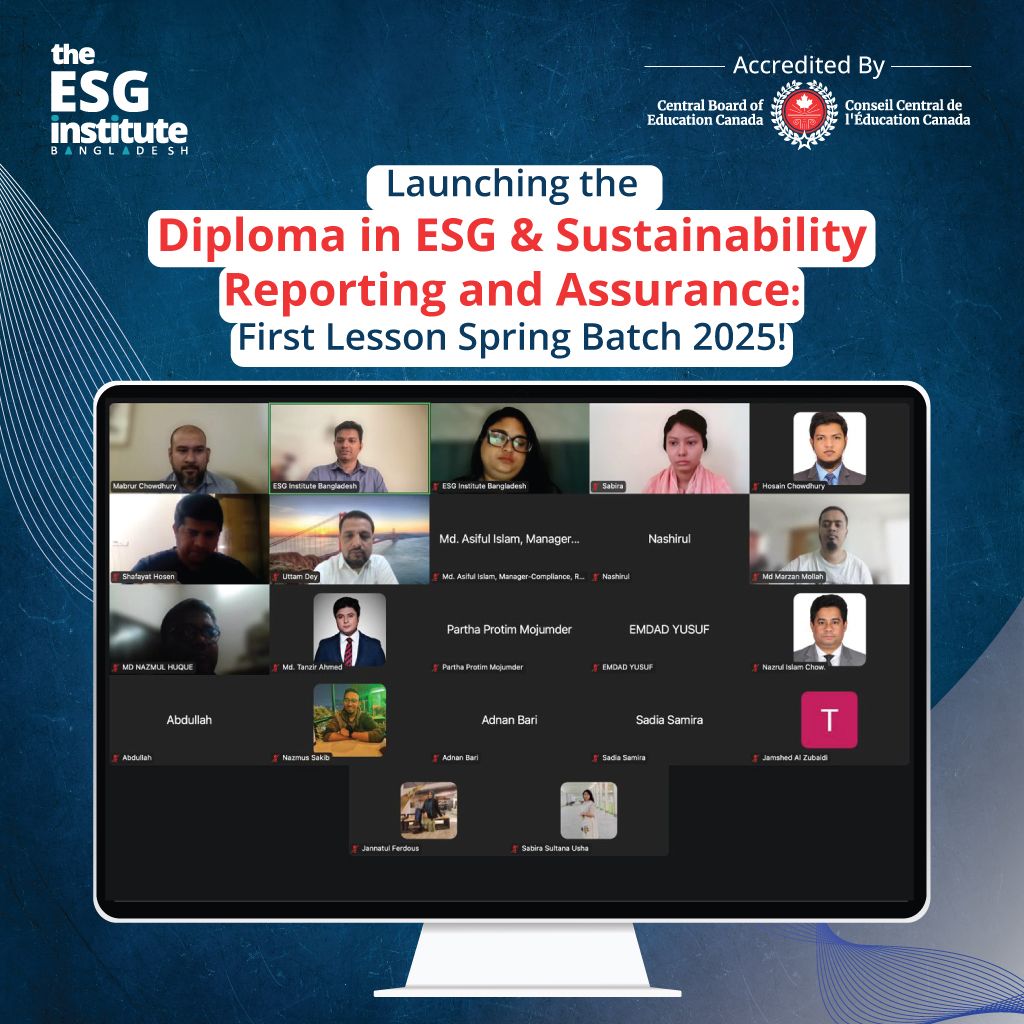
What is ESG & Sustainability Reporting & Assurance (ESGSRA)?
ESG & Sustainability Reporting & Assurance (ESGSRA) refers to the structured process of measuring, disclosing, and verifying a company’s ESG performance. This reporting ensures accountability, enhances stakeholder trust, and aligns businesses with global best practices.
The key frameworks covered under ESGSRA include:
- Global Reporting Initiative (GRI)—Provides comprehensive sustainability reporting guidelines.
- Task Force on Climate-related Financial Disclosures (TCFD) – Focuses on climate risk disclosure.
- Greenhouse Gas (GHG) Protocol—Measures carbon footprint and emission reduction strategies.
- International Financial Reporting Standards (IFRS) S1 & S2—Establish standards for sustainability and climate-related disclosures.
- ESG Assurance—Ensures independent verification and credibility of ESG data.
The Importance of ESGSRA in Bangladesh’s Industrial Sector
1. Enhancing Global Competitiveness and Export Market Access
Bangladesh’s economy is heavily dependent on exports, particularly in Ready-Made Garments (RMG), textiles, leather, and manufacturing. International buyers and investors increasingly demand ESG compliance as a prerequisite for business partnerships. Companies that fail to comply with ESG standards risk losing access to key export markets.
2. Attracting Foreign Direct Investment (FDI) and Green Finance
Sustainable finance is becoming a key driver for industrial development. Global investors, banks, and financial institutions prioritize businesses that meet ESG criteria. Proper ESG reporting and assurance make Bangladeshi industries more attractive for FDI, green loans, and sustainability-linked bonds, helping them secure financial support for expansion and modernization.
3. Regulatory Compliance and Policy Alignment
The Bangladesh government and regulatory bodies, such as the Bangladesh Securities and Exchange Commission (BSEC) and Bangladesh Bank, are increasingly promoting sustainable finance and ESG disclosures.
- The BSEC issued guidelines on sustainability reporting for listed companies.
- Bangladesh Bank promotes green banking initiatives and climate risk disclosures. Industries that adopt ESGSRA practices will stay ahead of regulatory changes and avoid penalties.
4. Improving Operational Efficiency and Cost Savings
ESG reporting helps industries optimize resource consumption, reduce waste, and improve energy efficiency. For example:
- Implementing GHG Protocol-aligned strategies reduces carbon emissions and energy costs.
- Adopting circular economy principles lowers material waste and enhances resource efficiency.
- Improved occupational health and safety (OHS) measures reduce workplace accidents and insurance costs.
5. Enhancing Brand Reputation and Consumer Trust
Modern consumers and corporate buyers prefer ethically produced and environmentally sustainable products. Companies that embrace ESG transparency build stronger reputations, increase brand loyalty, and differentiate themselves in competitive markets.
Challenges and the Way Forward
Despite the benefits, Bangladeshi industries face challenges in adopting ESGSRA practices, including:
- Lack of Awareness and Technical Expertise—Many industries are unfamiliar with global ESG standards.
- High Initial Investment—Implementing sustainability measures can be costly in the short term.
- Limited Data Collection Infrastructure—Reliable ESG data management remains a challenge.
To overcome these barriers, industries need capacity-building programs, strategic policy interventions, and partnerships with ESG consultants. At Circular Inclusive Solutions (CIS), we specialize in helping businesses integrate ESG best practices, conduct sustainability reporting, and achieve global compliance.
How CIS Can Help
At Circular Inclusive Solutions (CIS), we offer expert consulting services on ESG, GRI Standards, and sustainability frameworks. Our services include: ✅ ESG & Sustainability Reporting Guidance
✅ Carbon Footprint & GHG Accounting
✅ ESG Assurance & Third-Party Verification
✅ Impact Investment & Green Finance Advisory
✅ Capacity Building & Corporate ESG Training
For details, contact us:
📞 +8801760813768
📧 info@cisconsulting.org
🌐 www.cisconsulting.org
Conclusion
As ESG & Sustainability Reporting & Assurance (ESGSRA) gains momentum in Bangladesh, industries must proactively integrate ESG frameworks. Whether for global competitiveness, regulatory compliance, financial investment, or operational efficiency, ESG is the future of sustainable business. By adopting structured ESG reporting and assurance, Bangladesh’s industrial sector can drive long-term growth while ensuring environmental and social responsibility.